


Author: Rolf Olsson
-

Many organizations are investing heavily in AI but are still not seeing the major changes they had hoped for. This article discusses why good technical knowledge is not enough to transform an organization. AI can make work faster and easier, but to create greater value, organizations also need to change the way they are led, make decisions, and…
-
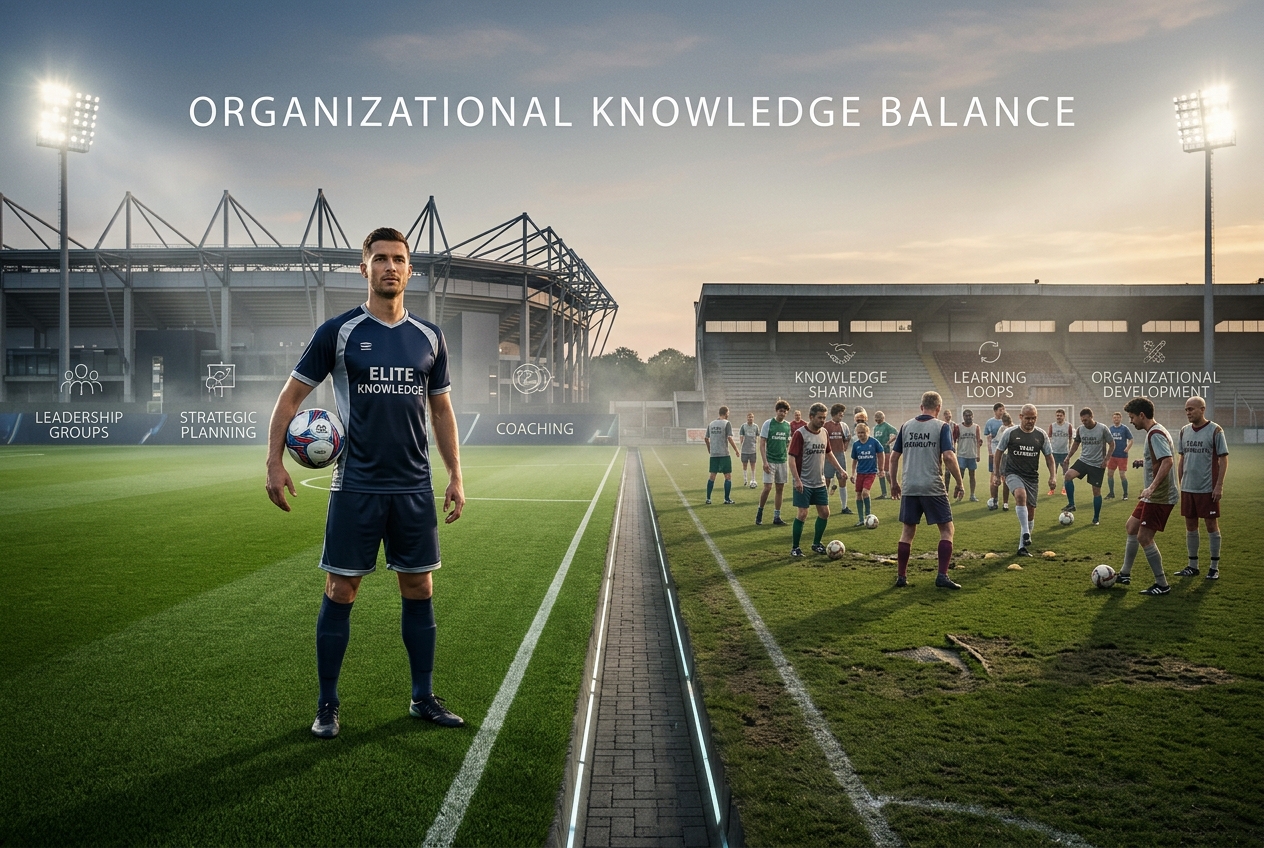
An experienced project manager, a skilled change leader, or a strong consulting team can create momentum in an organization. But what happens when the expert leaves? If the results disappear with the person, we need to ask ourselves what the organization has learned. This article explores the difference between borrowing expertise and building shared capabilities. Using the football team as a metaphor, the article focuses on…
-

When organizations stop seeing reality Introduction Most organizational crises do not occur suddenly. They are often preceded by a longer period during which the organization’s self-image gradually begins to diverge from how customers, employees, suppliers, and other stakeholders actually perceive the business. This phenomenon can be described as the Organizational Self-Image Gap (OSIG). However, the problem is not the gap itself. The real issue is the…
-

When profit threatens safety – lessons from Boeing Boeing’s evolution from an engineering-driven model to a cautionary example shows how a unilateral focus on profitability can threaten safety, quality, and trust. The article highlights the leadership’s responsibility to balance financial goals with culture, expertise, and long-term value creation – and why strategic coordination and change management are crucial for sustainable organizations in the…
-

Organizations invest large resources in new systems and work methods, but often miss the value that can be created after implementation. When projects are completed, the innovation journey stops, despite the technology, knowledge, and opportunities remaining. The question is what this untapped potential costs – and why it is so rarely made visible. Left untapped innovation space: The most expensive cost that never ends up in the budget…
-

Chief of Staff as the Sense Maker of the Future As organizations are flooded with data, governance models, digital tools, and specialist knowledge, the real challenge is not gathering more information, but understanding what it means together. Fragmented perspectives, competing priorities, and complex dependencies make it increasingly difficult for management to see the big picture and translate insights into coordinated action.…
-

Chief of Staff in a world of paradoxes In an era where innovation, sustainability, and growth are increasingly being created between organizations, leadership faces new demands. Companies, the public sector, academia, and civil society need to collaborate to solve complex challenges, while each actor must safeguard their own direction, identity, and competitiveness. The result is everyday life…
-

The organization of the future: When value creation replaces silos How will an organization with 1,000 employees look like in ten years? Will we still recognize today’s organizational structure with HR, IT, finance, marketing, and production as separate units, or are we facing a completely new way of organizing work? The technological development, with artificial intelligence, automation, and…
-

Dunning-Kruger effect in the organization: When self-confidence runs ahead of competence In today’s organizations, decisions are made faster than ever before. Digitalization, AI, sustainability requirements, regulatory changes, and new business models drive a constant need for transformation. At the same time, a psychological phenomenon arises that often remains invisible to management teams, despite the fact that it can be one of the biggest reasons for failed change initiatives: the Dunning-Kruger effect.…
-

Everyone wants to be on the bandwagon: When visibility exceeds the organization’s capacity Visibility is one of the most coveted assets in today’s organizations. A successful presentation, an acclaimed launch, a well-attended conference, or a viral post can in a short time create an enormous influx of opportunities. More people want to collaborate, invest, join the team, or participate…
-

When skills are not enough: Why management teams often fail to lead change Most management teams consist of people with extensive experience, high levels of education, and proven success in their respective fields. Yet many organizations experience the same problems: strategies that never gain full traction, change initiatives that lose momentum, and decisions that are delayed or half-hearted. The question is…
-

Why organizational pace determines the ability to change In motorsport, the role of pace is clear. It leads the starting field, sets the speed, shows the direction, and creates the conditions for all participants to act in a coordinated manner. In the same way, leadership in an organization works. The leadership not only sets the strategy, but also defines the organization’s pace, focus, and priorities. This is what…
-

Task-oriented tactics as a competitive advantage in modern organizations In an era characterized by uncertainty, rapid changes, and increased complexity, many management teams face the same dilemma: How do we create control without stifling initiative? How do we ensure quality and direction without getting bogged down in detailed management? The answer can often be found in a management philosophy that has evolved over centuries within…
-
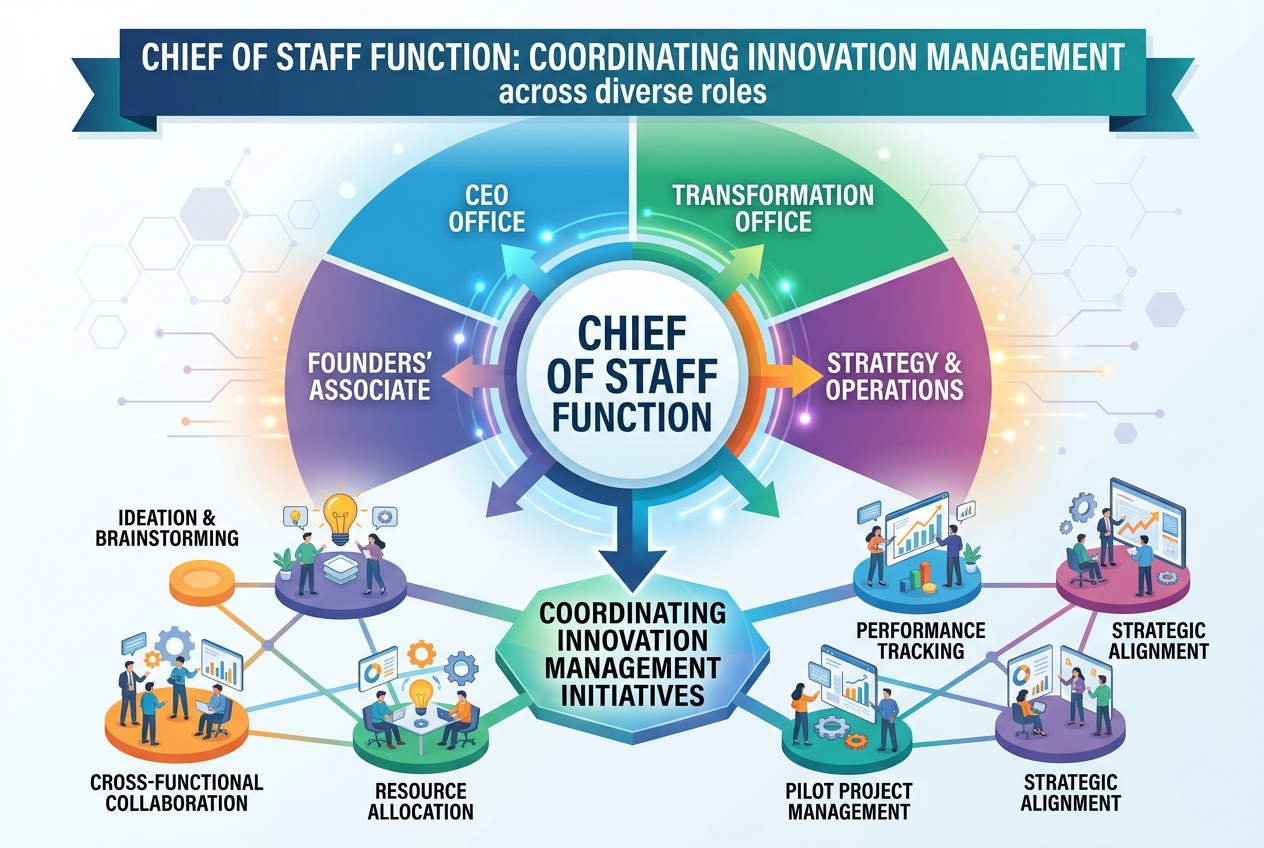
Chief of Staff in a time of constant change As organizations become increasingly complex, a recurring need arises: someone needs to see the big picture. Someone needs to coordinate strategic initiatives, ensure progress between different business areas, and help the management translate decisions into results. This is where the role of the Chief of Staff (CoS) comes in…
-

Why even the CEO needs an internal navigator to get change through. Not so many years ago, a CEO could identify a problem, call a consultant and start a change initiative within a few weeks. Decision-making power, budget responsibility and mandates often went a long way. Today, reality looks different. In many organizations, governance, risk management, compliance, information security, sustainability requirements…
-
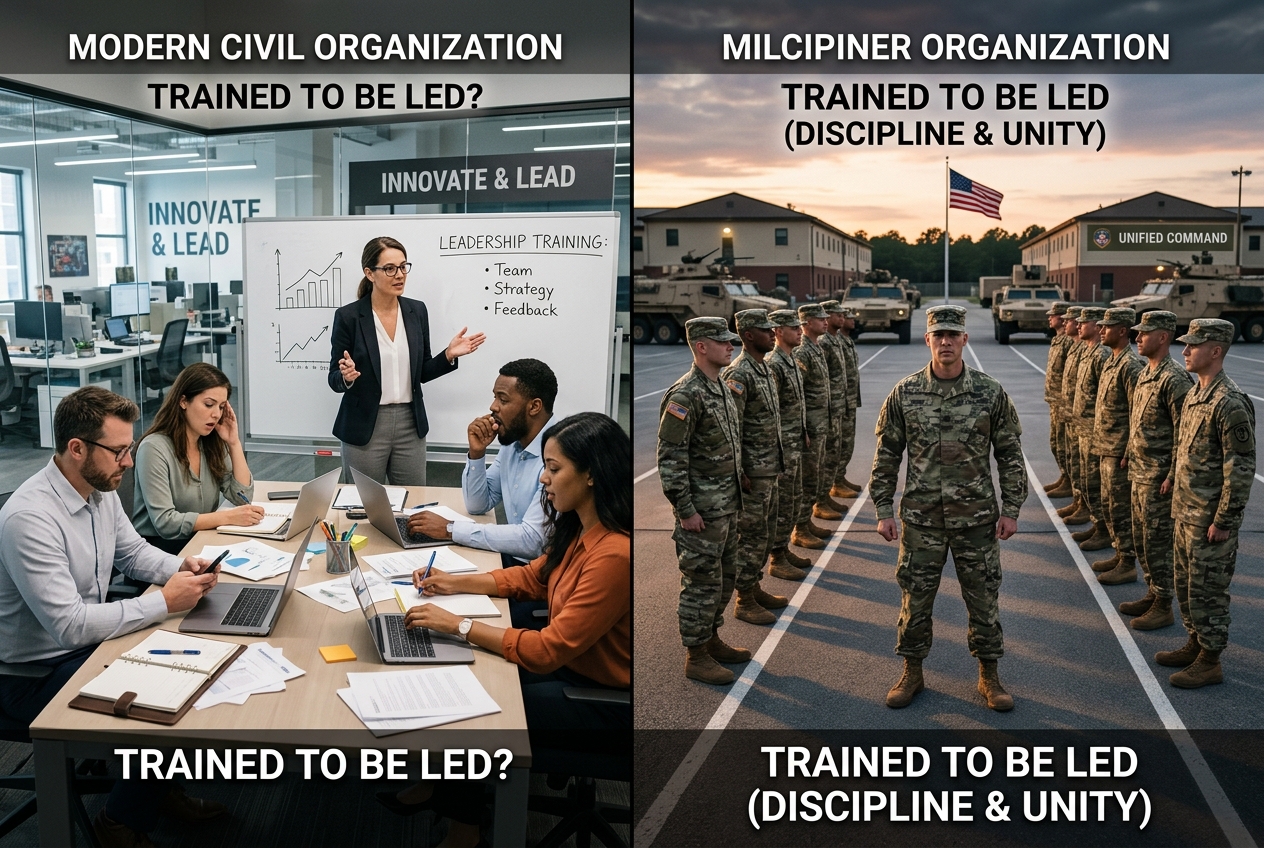
A forgotten success factor in modern organizations Leadership is often discussed from the perspective of the leader. We train managers, develop leadership models, and invest significant resources in creating better leaders. But far less often do we ask the opposite question: who trains employees to become leaders? This is a question that is becoming increasingly relevant in an age where…
-

Why organizational resilience has become a strategic competitive advantage In recent years, the concept of resilience has gone from being an academic buzzword to a crucial factor for organizations’ survival. Pandemics, geopolitical conflicts, cyberattacks, energy crises, and rapid technological developments have shown that even the most successful organizations can be exposed to events that change the game plan in a short time.…
-

Certification of the Chief of Staff – between professional identity and business benefit The role of the Chief of Staff (CoS) has in a short time gone from being a relatively unknown phenomenon to becoming a strategic function in many organizations. Especially in companies that drive extensive change programs, work with innovation, ESG, digitalization, or rapid growth, the need for…
-

Executive Office: a strategic key function for effective implementation In many organizations, significant time and resources are devoted to formulating strategies, identifying growth opportunities, and making decisions within the management team. Yet many CEOs, CFOs, and other leaders experience that the implementation does not keep pace with the ambitions. Strategic initiatives compete for attention, change programs overlap, and important decisions risk…
-
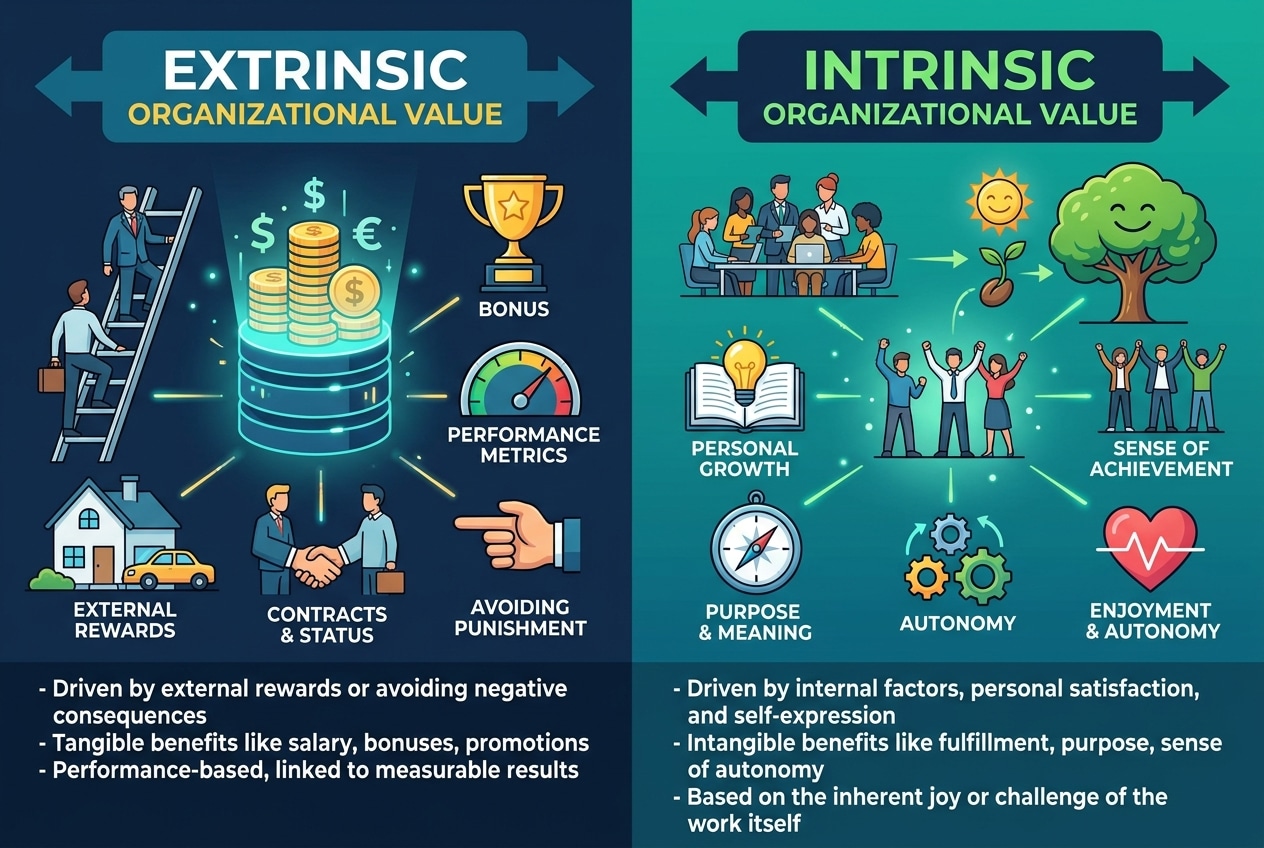
Why successful organizations must master both perspectives In an age where organizations are subjected to constant change, increasing complexity, and ever-increasing demands for results, the mission of leadership has become more multifaceted than ever before. Many management teams focus intensively on efficiency, process improvements, and operational excellence. Others focus their attention on strategy, innovation, and future market positioning. But the truly…
-

The balance between today's results and tomorrow's renewal In many management teams, there is today an explicit ambition to be more innovative. New business models are to be explored, digitalization is to be accelerated, AI is to be implemented, and sustainability initiatives are to be integrated into the business. At the same time, an undeniable reality remains: companies do not make money from tomorrow's innovations today. Profitability is created by what the organization delivers…
-

Chief of Staff – a key role for strategic success The role of the Chief of Staff (CoS) has in recent years evolved from being a relatively unknown function to becoming one of the most strategic positions in modern organizations. Whether it’s a rapidly growing technology company, a public service organization, or a global conglomerate, the CoS plays…
-

From decision-making tools to strategic power Management teams have always had a common problem: too little time and too much information. Reports need to be read, markets need to be analyzed, risks need to be assessed, and decisions need to be made at an increasingly rapid pace. At the same time, the demands for precision, transparency, and rapid adaptability are increasing. This is where artificial intelligence has gone from being an exciting…
-

The importance of mandates in constant change In an era where change is no longer a project but a permanent state of being, leaders face a crucial question: What exactly is my mandate? Whether the change is driven by digitalization, new business models, regulatory requirements, sustainability ambitions, or changing customer behaviors, the ability to understand and define one’s mandate becomes a critical factor of success.…
-

Over the next decade, few roles in the corporate world will change as quickly as the Chief of Staff (CoS). As organizations become more complex, the pace of change accelerates, and the demands from customers, employees, investors, and regulatory authorities increase, a clear need arises for a function that can create context, coordination, and execution. This is where…
-

In many organizations, success is not determined by a lack of ambition or ideas, but by the ability to balance what needs to be done today with what needs to be created for tomorrow. Management teams and leaders often find themselves in a constant tension between operational requirements and strategic initiatives. Customer requests must be handled, production targets must be met, financial results must be delivered, and…
-

Organizations today find themselves in a time where change is no longer an exception, but a permanent state of affairs. Technological advancements, increased sustainability requirements, changing employee expectations, and an increasingly uncertain world place new demands on leadership and governance. For management teams, success is no longer solely about formulating a strategy, but about the ability to continuously…
-

Every management team invests significant time in formulating strategies. Visions are hammered out, goals are defined, and ambitious initiatives are prioritized. Yet surprisingly many organizations find that day-to-day operations continue roughly as usual, despite the strategy being both well thought out and clearly communicated. The question is therefore not whether the organization has a strategy, but whether…
-

In an era where the pace of change is accelerating, markets are becoming more complex, and the demands on leadership are constantly increasing, many executives face the same challenge: How can I create enough focus on strategic issues while the business continues to deliver results every day? For many organizations, the answer is increasingly becoming a close and well-functioning relationship between the CEO…