



Chief of Staff – The bridge between strategy and implementation
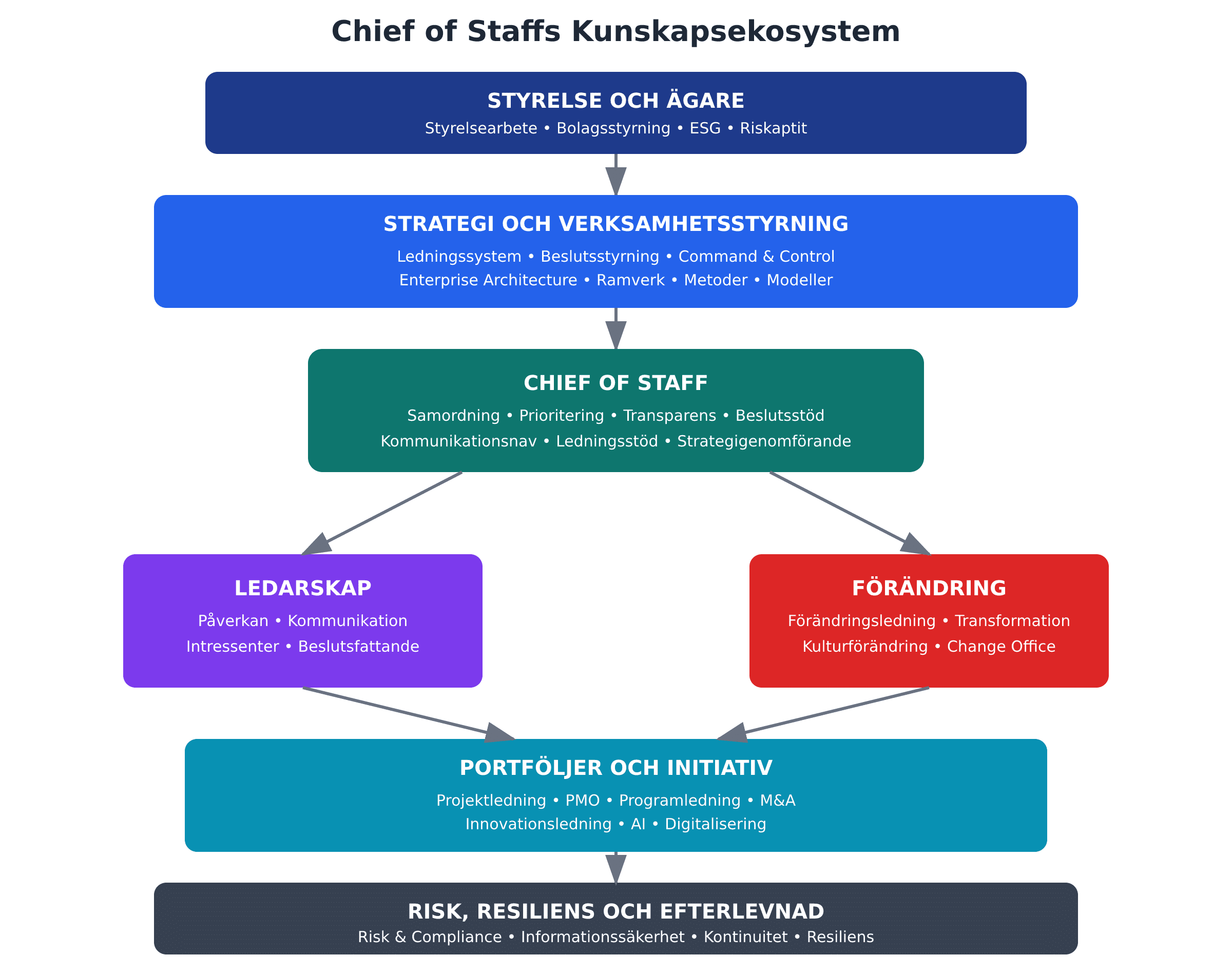
I en allt mer komplex och föränderlig affärsmiljö har rollen som Chief of Staff utvecklats till en av organisationens mest strategiskt viktiga funktioner. Chief of Staff fungerar som en nära rådgivare till ledning och styrelse, samtidigt som rollen säkerställer att strategiska initiativ omsätts till konkreta resultat. Det är en position som kräver både helhetsperspektiv och operativ förståelse, där förmågan att navigera mellan affär, människor, styrning och förändring är avgörande. En framgångsrik Chief of Staff behöver ha en bred och djup knowledge inom flera centrala verksamhetsområden:
Change management and innovation management are fundamental competencies for supporting the organization's development and ensuring that new ideas, working methods, and business models are implemented effectively. As sustainability issues become increasingly integrated into the business strategy, a good understanding of ESG (Environmental, Social and Governance) and how sustainability work creates long-term value.
Project management and project offices (PMO) utgör en viktig del av rollen, då många strategiska initiativ drivs i projektform. Chief of Staff behöver kunna prioritera resurser, skapa transparens och säkerställa att projektportföljen stödjer verksamhetens övergripande mål. Samtidigt är knowledge inom resiliens, riskhantering och compliance avgörande för att organisationen ska kunna hantera osäkerheter, regulatoriska krav och affärsrisker på ett strukturerat sätt.
At business acquisitions and mergers The Chief of Staff often plays a key role. This means understanding the entire process of Mergers & Acquisitions (M&A), from strategy and due diligence to pre/post-merger integration, where businesses, cultures, and processes must be aligned to realize expected synergies.
Leadership is another key dimension. Chief of Staff leder inte alltid genom formellt chefsansvar utan ofta genom påverkan, samordning och koordinering mellan olika funktioner och intressenter. Rollen kräver därför hög kommunikativ förmåga, integritet och förtroendeskapande ledarskap. Därtill behövs god knowledge om styrelsearbete, beslutsstyrning och bolagsstyrning för att skapa effektiva beslutsprocesser och säkerställa att lednings- och styrelsearbete stödjer organisationens långsiktiga riktning.
One of the most important areas of responsibility is to support the implementation of the strategy. Many organizations formulate ambitious strategies, but the real value only emerges when the strategy is translated into action. The Chief of Staff serves as a catalyst here, coordinating initiatives, monitoring progress, and ensuring that the organization remains focused on prioritized goals.
In order to succeed, a strong understanding of the business and the transaction is also required. This means knowledge om marknad, kunder, värdekedjor, ekonomiska drivkrafter och konkurrenssituation. Without this business understanding, strategic initiatives risk lacking real business relevance.
In summary, the Chief of Staff is a strategic enabler who unites the management's vision with the organization's implementation capabilities. By combining expertise in change, innovation, sustainability, governance, Risk & Compliance, Project management, M&A, leadership and business development contribute to creating focus, increased efficiency and long-term business value. In modern organizations, the Chief of Staff is therefore not just a management support function, but a key person for translating ambitions into sustainable results.

