


-
Organizational self-image

När organisationer slutar se verkligheten Inledning De flesta organisatoriska kriser uppstår inte plötsligt. De föregås ofta av en längre period där organisationens självbild gradvis börjar skilja sig från hur kunder, medarbetare, leverantörer och andra intressenter faktiskt upplever verksamheten. Detta fenomen kan beskrivas som Organizational Self-Image Gap (OSIG). Problemet är dock inte själva gapet. Det verkliga problemet uppstår när organisationen förlorar förmågan att upptäcka att gapet finns. Det är då organisationen riskerar att utveckla det som kan beskrivas som Organizational Blindness – ett tillstånd där den interna berättelsen blivit starkare än verkligheten. För Chief of Staff, VD och styrelse är detta…
5–7 minutes1,152 words
-
Maximizing profit at all costs

When profit threatens safety – lessons from Boeing Boeing’s evolution from an engineering-driven model to a cautionary example shows how a unilateral focus on profitability can threaten safety, quality, and trust. The article highlights the leadership’s responsibility to balance financial goals with culture, competence, and long-term value creation – and why strategic coordination and change management are crucial for sustainable organizations in a rapidly changing world. When profitability becomes a risk: What Boeing teaches us about leadership, culture, and long-term sustainability Boeing, aviation safety, and the danger of a unilateral focus on profit There are few organizations as associated with technical excellence as Boeing. For most of its history, Boeing has been synonymous with technological excellence. During most of its history, Boeing has been the largest and most profitable aircraft manufacturer in the world…
6–9 minutes1,380 words
-
Left out innovation space

Organizations invest large resources in new systems and working methods, but often miss the value that can be created after implementation. When projects end, the innovation journey stops, despite the technology, knowledge, and opportunities remaining. The question is what this untapped potential costs – and why it is so rarely visible. Left untapped innovation space: The most expensive cost that never ends up in the budget Why organizations miss the real return on their investments When organizations invest in new systems, processes, or working methods, the focus is often directed towards the implementation itself. The management team scrutinizes investment calculations, procurement, and consulting costs with great precision. Every external invoice is analyzed in minute detail. But at the same time, the management team often fails to…
6–8 minutes1,317 words
-
The Sense Maker of the Future

Chief of Staff as the Sense Maker of the Future As organizations are flooded with data, governance models, digital tools, and specialist knowledge, the real challenge is not gathering more information, but understanding what it means together. Fragmented perspectives, competing priorities, and complex dependencies make it increasingly difficult for management to see the big picture and translate insights into coordinated action. Therefore, the role of the Chief of Staff is continuing to fundamentally change. From being primarily a coordinator and management support, the role is evolving into a strategic Sense Maker – an integrator who creates meaning, translates between functions, and unites strategy, people, processes, technology, and external ecosystems. The article…
6–9 minutes1,387 words
-
The paradoxes of business development

Chief of Staff in a World of Paradoxes In an era where innovation, sustainability, and growth are increasingly created between organizations, leadership faces new demands. Businesses, the public sector, academia, and civil society need to collaborate to solve complex challenges, while each actor must safeguard their own direction, identity, and competitiveness. The result is a daily reality filled with paradoxes: freedom requires structure, autonomy requires coordination, and long-term ambitions must be reconciled with short-term results. This article explores fifteen contradictions that characterize modern business development and shows why they cannot be solved with simple answers. Instead, they need to be managed through clarity, trust…
6–10 minutes1,506 words
-
Organisation 2035 – a foresight study

The organization of the future: When value creation replaces silos How will an organization with 1,000 employees look like in ten years? Will we still recognize today’s organizational structure with HR, IT, finance, marketing, and production as separate units, or are we facing an entirely new way of organizing work? The technological development, with artificial intelligence, automation, and data-driven decision-making at the forefront, challenges many of the principles that governed organizations over the past century. At the same time, the demands for rapid adaptation, innovation, and efficiency are increasing in both the private and public sectors. This makes traditional silos increasingly perceived as obstacles rather than enablers. The organization of the future…
6–9 minutes1,391 words
-
Dunning-Kruger effect

Dunning-Kruger effect in the organization When self-confidence runs ahead of competence In today's organizations, decisions are made faster than ever before. Digitalization, AI, sustainability requirements, regulatory changes, and new business models drive a constant need for transformation. At the same time, a psychological phenomenon arises that often remains invisible to management teams, despite the fact that it can be one of the biggest reasons for failed change initiatives: the Dunning-Kruger effect. The term describes the tendency of people to overestimate their own knowledge in an area where they actually have limited experience. The less someone knows, the more difficult it becomes to realize the extent of the unknown. The result is often a high level of self-confidence combined with limited understanding of…
6–9 minutes1,358 words
-
Everyone must get on the train

Everyone wants to be on the bandwagon: When visibility exceeds the organization’s capacity Visibility is one of the most coveted assets in today’s organizations. A successful presentation, a well-attended conference, or a viral post can quickly create an enormous influx of opportunities. More people want to collaborate, invest, join the team, or participate in the journey. The problem is that what looks like success on the surface often creates an invisible pressure beneath the surface. Many leadership teams naturally focus on creating attention. Visibility signals relevance, innovation, and confidence in the future. But visibility is not an objective in itself. It is the beginning…
5–7 minutes1,167 words
-
When competence is not enough: Why management teams often fail to lead change

When skills are not enough: Why management teams often fail to lead change Most management teams consist of people with extensive experience, high levels of education, and proven success in their respective fields. Yet many organizations experience the same problems: strategies that never gain full traction, change initiatives that lose momentum, and decisions that are delayed or half-hearted. The question, therefore, is not whether the members of the management team are competent. The question is why so many competent people together have such difficulty creating real change-making power. In many organizations, management group meetings become long, agendas are abandoned after a few minutes, and the discussions get bogged down in details that really belong further down in the hierarchy...
6–8 minutes1,335 words
-
Organizational Pace: When the leadership IS the organization's pace car

Why organizational pace determines the ability to change In motorsport, the role of pace is clear. It leads the starting field, sets the speed, indicates the direction, and creates the conditions for all participants to act in a coordinated manner. Similarly, leadership in an organization functions in the same way. Leadership not only sets the strategy, but also defines the organization’s pace, focus, and priorities. This is what can be described as the organization’s ”pace,” that is, the overall rhythm that determines how quickly and in which direction the organization moves. The analogy becomes particularly relevant in large and geographically dispersed organizations where information must pass through several levels before it reaches employees at the farthest end of the organization…
6–9 minutes1,373 words
-
Task-oriented tactics or detail control? Leadership that frees the organization's full potential

Missionary tactics as a competitive advantage in modern organizations In a time characterized by uncertainty, rapid changes, and increased complexity, many management teams face the same dilemma: How do we achieve control without stifling initiative? How do we ensure quality and direction without getting bogged down in detailed control? The answer can often be found in a management philosophy that has evolved over centuries within the military, but that is today at least as relevant for modern organizations: missionary tactics. Missionary tactics is based on a simple but powerful idea. The manager defines what should be achieved and why it is important, while responsibility for how the task should be accomplished is delegated to those closest to the situation…
6–8 minutes1,304 words
-
Chief of Staff: Role or function? Why the question is more important than the title
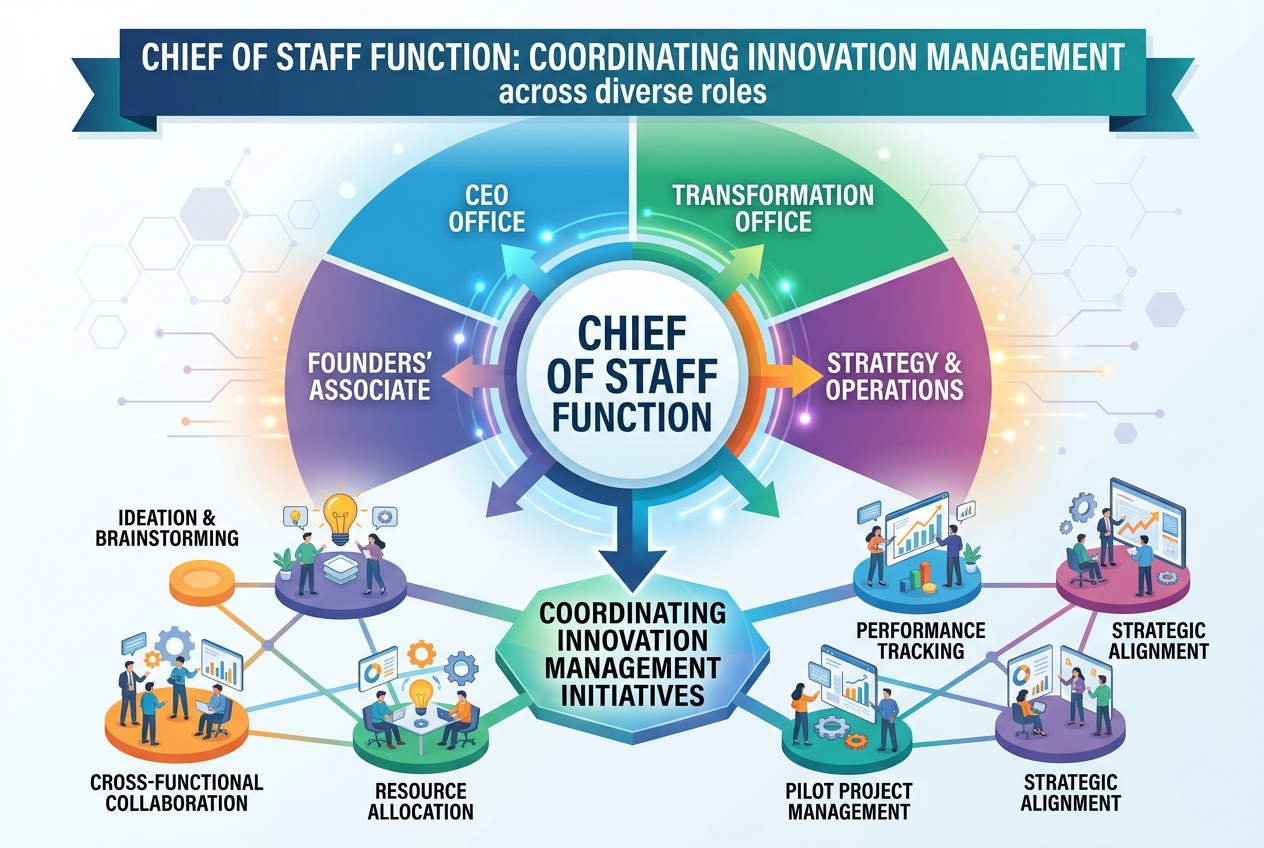
Chief of Staff in a time of constant change As organizations become increasingly complex, a recurring need arises: someone has to see the big picture. Someone has to coordinate strategic initiatives, ensure progress between different business areas, and help management translate decisions into results. This is where the role of the Chief of Staff (CoS) comes into play. But an interesting question often arises when companies consider introducing a Chief of Staff: is this really a role or a function? At first glance, the question may seem semantic, but it has great significance for how organizations design their management support, make decisions, and…
6–8 minutes1,312 words
-
MEDDICC, Chief of Staff and the new reality of change initiatives

Why even the CEO needs an internal navigator to bring about change. Not so many years ago, a CEO could identify a problem, call a consultant and start a change initiative within a few weeks. Decision-making power, budget responsibility and mandate often went a long way. Today, reality looks different. In many organizations, governance, risk management, compliance, information security, sustainability requirements, and procurement processes have become so extensive that even a relatively limited consulting effort must pass through multiple internal control checkpoints before a contract can be signed. Paradoxically, this has arisen at a time when the need for change has never been greater. Digitization, AI, geopolitical uncertainty, and increased regulatory requirements are forcing…
5–8 minutes1,263 words
-
Leading people who can also be led
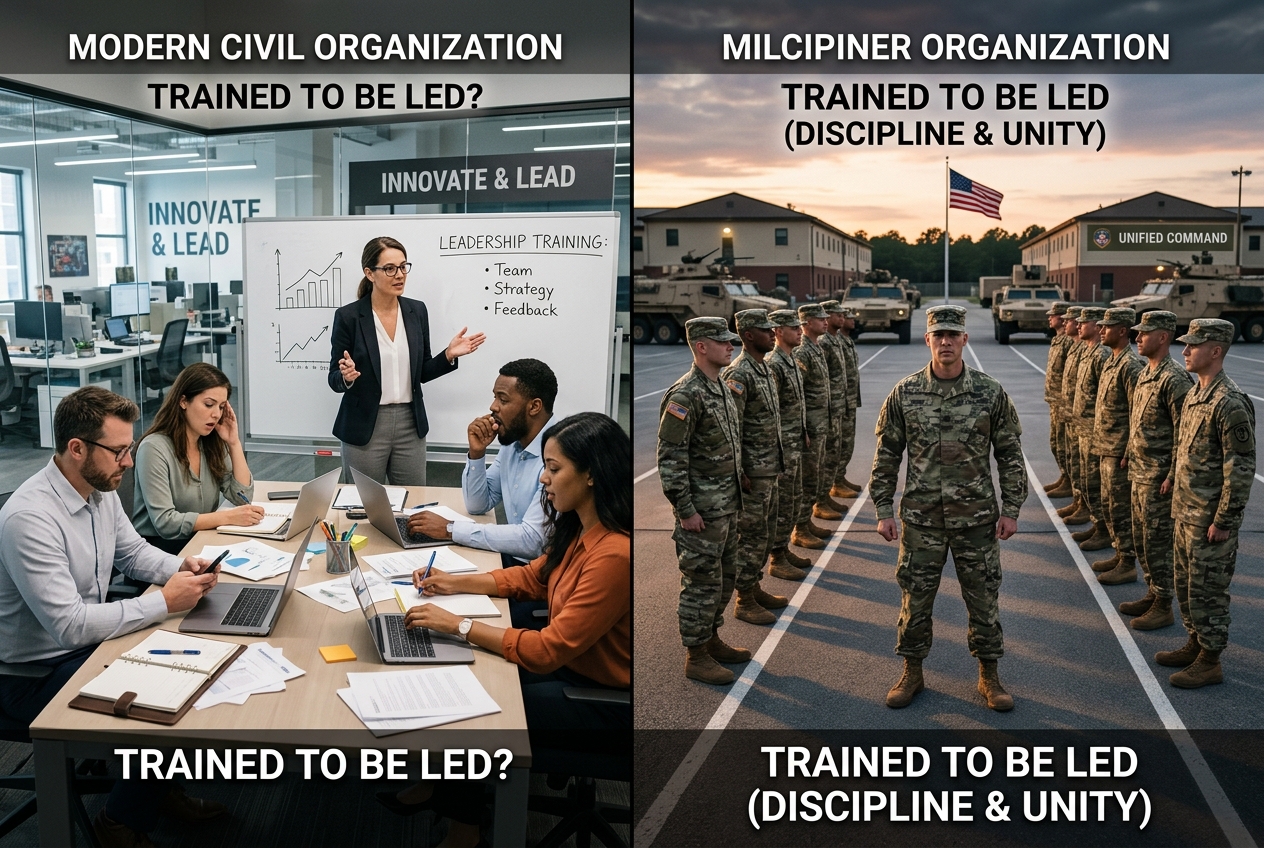
A forgotten success factor in modern organizations Leadership is often discussed from the perspective of the leader. We train managers, develop leadership models, and invest significant resources in creating better leaders. But far less often do we ask the opposite question: who is training employees to become leaders? This is a question that is becoming increasingly relevant in an era where organizations are expected to implement rapid changes, manage uncertainty, and mobilize large groups of people around common goals. My own experience from military leadership has led me to reflect on a crucial difference between military and civilian organizations. In the military world, leadership is a reciprocal system. In it…
5–7 minutes1,067 words
-
Resilience in organizations: The key to survival as the world changes

Why organizational resilience has become a strategic competitive advantage Over the past few years, the concept of resilience has gone from being an academic buzzword to a crucial factor in organizations’ survival. Pandemics, geopolitical conflicts, cyberattacks, energy crises, and rapid technological development have shown that even the most successful organizations can be subjected to events that in a short time change the game plan. Many management teams traditionally focus on growth, market share, and efficiency. These areas are undoubtedly important, but history shows that organizations that solely optimize for efficiency often become vulnerable when the external environment changes. An organization that is maximally efficient can at the same time be minimally adaptable. Resilience therefore is not…
5–7 minutes1,129 words
-
Certification of the Chief of Staff in Sweden: Is it really necessary?

Certification of the Chief of Staff – between professional identity and business benefit The role of the Chief of Staff (CoS) has in a short time gone from being a relatively unknown phenomenon to becoming a strategic function in many organizations. Especially in companies that drive extensive change programs, work with innovation, ESG, digitalization, or rapid growth, the need for a person who coordinates the management’s priorities has become increasingly evident. At the same time, an interesting question is emerging: should the role be professionalized through a formal certification? For established professions such as project managers, auditors, and sustainability specialists, certifications have long been accepted as a way to signal competence. But the Chief of…
5–8 minutes1,235 words
-
The Executive Office as a driving force for implementation: From strategy to results

Executive Office: a strategic key function for effective implementation In many organizations, significant time and resources are spent formulating strategies, identifying growth opportunities, and making decisions within the management team. Yet many CEOs, CFOs, and other leaders feel that implementation does not keep pace with the ambitions. Strategic initiatives compete for attention, change programs overlap, and important decisions risk remaining at the meeting level. Here, the Executive Office, or leadership office, becomes a crucial function. A modern Executive Office is much more than an administrative support function. It serves as the organization’s coordinating hub for strategy, governance, prioritization, and change management. By creating structure around the management agenda, the Executive Office…
6–9 minutes1,382 words
-
Chief of Staff and the dual mission of leadership: Doing things right and doing the right things
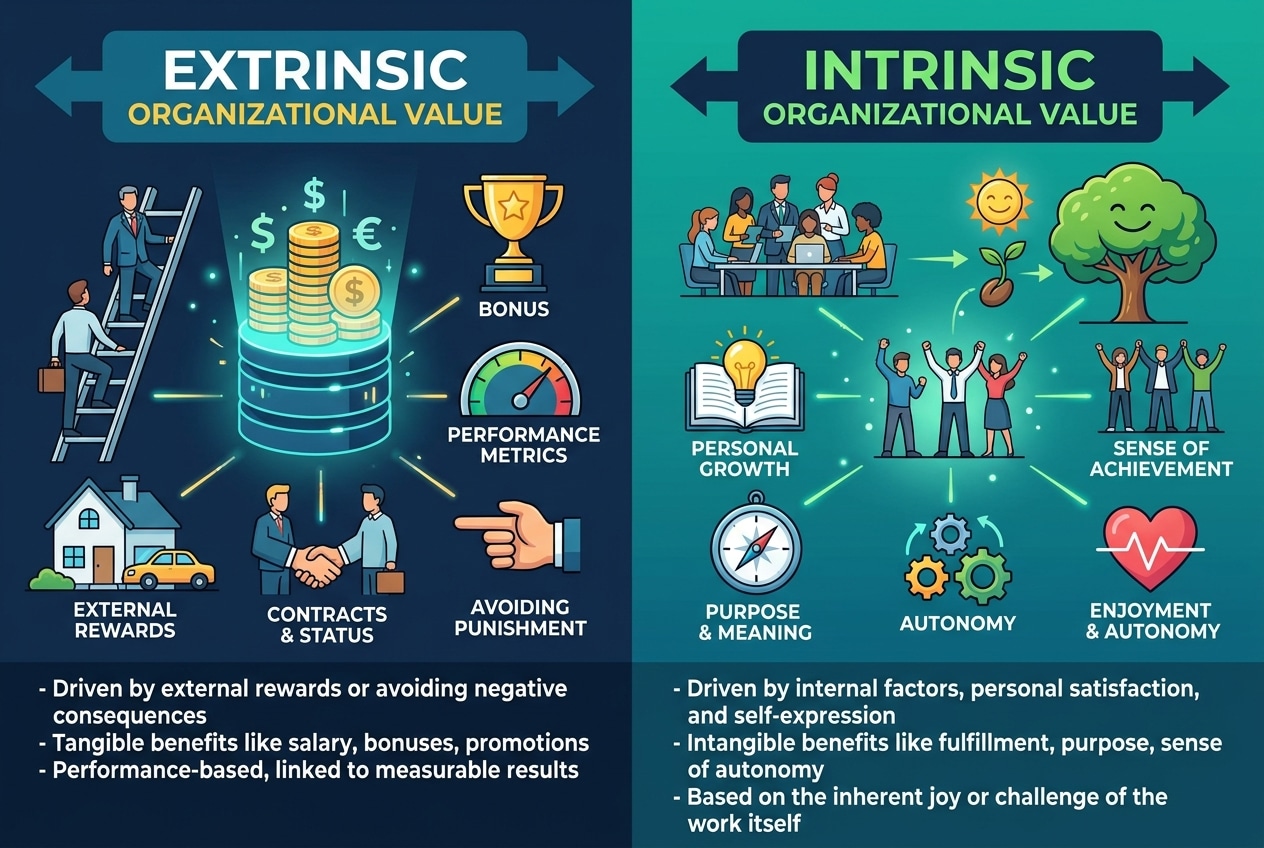
Why successful organizations must master both perspectives In an era where organizations are subjected to constant change, increasing complexity, and ever-increasing demands for results, the mission of leadership has become more multifaceted than ever before. Many management teams focus intensively on efficiency, process improvements, and operational excellence. Others turn their attention to strategy, innovation, and future market positioning. But the truly successful organizations understand that these perspectives are not opposites but two sides of the same coin. In the literature on leadership, we often talk about the difference between doing things right and doing the right things. The first concerns quality, efficiency, and the ability to carry out activities in a…
6–8 minutes1,304 words
-
Ambidextri * in the executive room: Why the Chief of Staff must balance innovation and operational efficiency

The balance between today's results and tomorrow's renewal In many management teams, there is today an explicit ambition to be more innovative. New business models are to be explored, digitalization is to be accelerated, AI is to be implemented, and sustainability initiatives are to be integrated into the business. At the same time, an undeniable reality remains: companies do not make money from tomorrow's innovations today. Profitability is created by what the organization delivers here and now, through existing products, services, processes, and customer relationships. This is where one of the most underestimated management challenges of our time arises. How do you ensure that the organization can both deliver high efficiency in today's operations and simultaneously develop tomorrow's opportunities? Too much focus on innovation risks...
6–9 minutes1,473 words
-
What is required to become a successful Chief of Staff?

Chief of Staff – a key role for strategic success The role of the Chief of Staff (CoS) has in recent years evolved from being a relatively unknown function to becoming one of the most strategic positions in modern organizations. Whether it’s a rapidly growing technology company, a public service organization, or a global conglomerate, the Chief of Staff serves as the link between vision and execution. The role rarely involves formal power. Instead, it builds on the ability to create clarity, coordinate people, and help the leadership focus on what really matters. The best description of a successful Chief of Staff…
5–8 minutes1,215 words
-
AI tools that change the work of the management team

From decision-making tools to strategic power Management teams have always had a common problem: too little time and too much information. Reports need to be read, markets need to be analyzed, risks need to be assessed, and decisions need to be made at an increasingly rapid pace. At the same time, the demands for precision, transparency, and rapid adaptability are increasing. This is where artificial intelligence has gone from being an exciting area of technology to becoming a practical tool in boardrooms and management teams. Over the past few years, AI has evolved from primarily automating routine tasks to acting as an intelligent assistant for knowledge work. Tools like Microsoft Copilot, ChatGPT, Claude et al., and specialized analytics platforms are helping management teams today…
5–7 minutes1,149 words
-
How do you define your mandate in a changing organization?

The importance of mandates in constant change In an era where change is no longer a project but a permanent state of being, leaders face a crucial question: What exactly is my mandate? Regardless of whether the change is driven by digitalization, new business models, regulatory requirements, sustainability ambitions, or changing customer behaviors, the ability to understand and define one’s mandate becomes a critical success factor. Many organizations today describe themselves as agile, adaptive, and change-oriented. At the same time, many managers and leadership teams are experiencing growing uncertainty regarding responsibilities, decision-making authority, and priorities. As roles change faster than organizational charts are updated, a vacuum easily arises where initiatives are slowed down, duplication of work arises, and important decisions are delayed…
6–9 minutes1,367 words
-
The development of the Chief of Staff role over the next decade

Over the next decade, few roles in the corporate world will change as quickly as the Chief of Staff (CoS). As organizations become more complex, the pace of change accelerates, and the demands from customers, employees, investors, and regulatory authorities increase, a clear need arises for a function that can create context, coordination, and execution. This is where the Chief of Staff role emerges as one of the most strategically important positions in modern organizations. Historically, the Chief of Staff has often been viewed as an administrative or support role close to the CEO or the management team. The role has sometimes been misunderstood as an advanced assistant function or a coordinator of…
6–9 minutes1,420 words
-
The balance between operational work and strategic planning

In many organizations, success is not determined by a lack of ambition or ideas, but by the ability to balance what needs to be done today with what needs to be created for tomorrow. Management teams and executives often find themselves in a constant tension between operational requirements and strategic initiatives. Customer requests must be handled, production targets must be met, financial results must be delivered, and at the same time the business is expected to evolve, renew, and adapt to a rapidly changing world. The operational work is the backbone of the organization. It ensures quality, delivery capability, and customer satisfaction. Without well-functioning processes and daily management, the business risks losing both efficiency and competitiveness. At the same time, strategic planning is the engine…
6–9 minutes1,444 words
-
Future organizational trends to keep an eye on

Organizations find themselves in a time today where change is no longer an exception, but a permanent state of affairs. Technological advancements, increased sustainability requirements, changing employee expectations, and an increasingly uncertain external environment place new demands on leadership and governance. For management teams, success is no longer solely about formulating a strategy, but about the ability to continuously adapt the organization as circumstances change. In the coming years, we will see organizational trends reshaping how companies create value, lead people, and drive innovation. Hierarchical structures are gradually being replaced by more network-based working practices. Data-driven decision making becomes a hygiene factor rather than a competitive advantage. At the same time, the…
6–9 minutes1,409 words
-
Build bridges between strategy and day-to-day execution

Every management team invests significant time in formulating strategies. Visions are hammered out, goals are defined, and ambitious initiatives are prioritized. Yet surprisingly many organizations find that day-to-day operations continue roughly as usual, despite the strategy being both well-thought-out and clearly communicated. The question is therefore not whether the organization has a strategy, but whether it has the ability to translate the strategy into concrete action. The gap between strategy and execution is one of the biggest challenges for modern organizations. Management talks about transformation, innovation, digitalization, and sustainable growth, while employees focus on delivering today’s results, managing customer inquiries, and solving operational…
6–9 minutes1,362 words
-
Effective collaboration between the CEO and the Chief of Staff

In a time where the pace of change is accelerating, markets are becoming more complex, and the demands on leadership are constantly increasing, many executive directors face the same challenge: How can I create enough focus on strategic issues while the business continues to deliver results every day? For many organizations, the answer is increasingly becoming a close and well-functioning relationship between the CEO and the Chief of Staff. The role of the Chief of Staff has evolved over the past few years from primarily being an administrative support function to becoming a strategic partner for the management team. In successful organizations, the Chief of Staff acts as an extension of the CEO’s priorities, a coordinator…
6–9 minutes1,446 words